
Stomach Cancer Surgery in Hyderabad
Stomach cancer surgery with curative intent depends on the stage and whether the tumour can be safely removed (resectability). For suitable patients it is often combined with chemotherapy before and after the operation.
Active vomiting of blood, or black tarry stools with faintness or weakness, warrants immediate emergency assessment. For other suspected bleeding, seek urgent medical assessment rather than waiting for a routine clinic booking.
Quick answers
- Who performs it?
- Dr Sanjay Yadagiri, Consultant in Surgical Oncology in Hyderabad, performs stomach cancer surgery. Treatment planning considers staging, nutrition and any medical oncology input needed; discuss who will lead surgery at consultation.
- When is it considered?
- Gastrectomy may be considered for diagnosed, resectable stomach cancer after staging and fitness assessment. Some very early cancers suit endoscopic treatment. Symptoms need assessment, not automatic surgery; bleeding may require urgent or emergency care rather than routine booking.
- Where are consultations?
- Banjara Hills clinic, Mon-Sat: 1:00 PM - 5:00 PM. Sunday closed.
- How do I book?
- Use the booking form or call +91 70324 76866.
What is stomach cancer surgery?
Stomach (gastric) cancer surgery removes part or all of the stomach with nearby lymph nodes. A subtotal gastrectomy removes the affected part; a total gastrectomy removes the whole stomach and joins the oesophagus to the small bowel. Some very early cancers suit endoscopic removal. Treatment with curative intent depends on resectability and stage, and may include chemotherapy before and after surgery. In advanced disease, selected procedures may relieve blockage or bleeding rather than aim to cure the cancer. Suspected bleeding needs urgent assessment; active vomiting of blood or black tarry stools with faintness or weakness needs immediate emergency assessment.
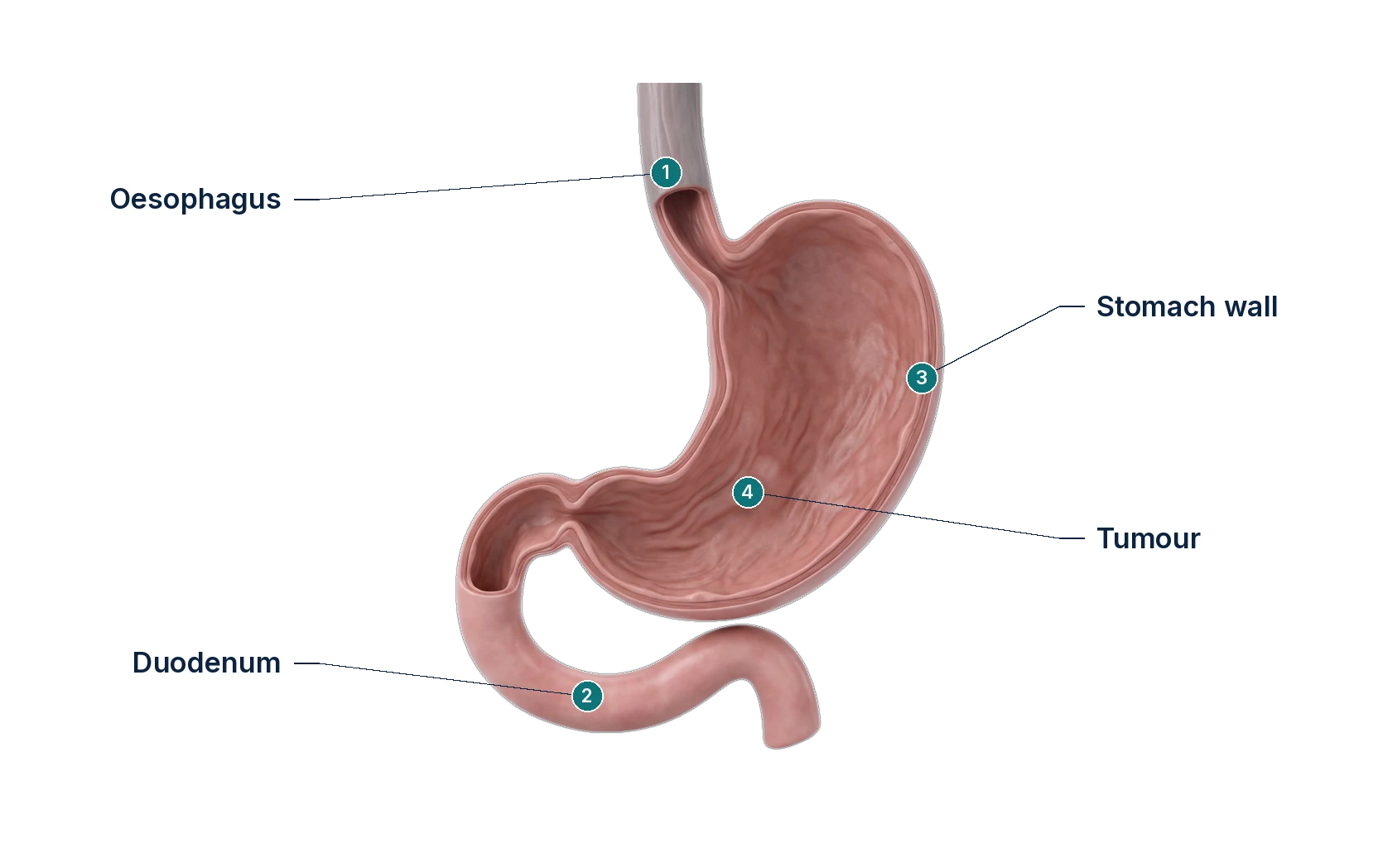
- Oesophagus
- Duodenum
- Stomach wall
- Tumour
The stomach connects the oesophagus to the duodenum. Your surgeon can explain how much stomach would be removed and how the digestive tract would be reconnected.
Symptoms that should be checked
Active vomiting of blood, or black tarry stools with faintness or weakness, warrants immediate emergency assessment. For other suspected bleeding, seek urgent medical assessment rather than waiting for a routine clinic booking.
- Persistent indigestion or upper abdominal discomfort
- Difficulty swallowing or feeling full after small meals
- Unexplained weight loss or loss of appetite
- Persistent vomiting; active vomiting of blood needs immediate emergency assessment
- Black tarry stools with faintness or weakness need immediate emergency assessment; other suspected bleeding needs urgent medical assessment
- Anaemia, which needs assessment to establish its cause
Having one or more of these does not mean you have cancer. Most have other, more common causes, and only examination and tests can tell the difference.
Assessment and staging
- • Endoscopy with biopsy to confirm the diagnosis
- • CT scan where needed to check for spread
- • Endoscopic ultrasound or laparoscopy in some cases
- • Nutrition and fitness review before major surgery
Surgical options
Operations used
- • Endoscopic removal for some very early cancers
- • Subtotal (partial) gastrectomy
- • Total gastrectomy
- • Removal of nearby lymph nodes
Choosing the approach
- • Open or minimally invasive approaches may be considered
- • Location and stage of the tumour guide the extent of surgery
- • Chemotherapy before surgery is common
- • Plans are agreed with medical oncology
The approach recommended for you is discussed after clinical assessment, with scans and biopsy results reviewed where needed or available. Not every procedure requires a biopsy or scans beforehand.
Possible risks
- • Leak from the join between bowel and oesophagus or stomach
- • Bleeding, infection and blood clots
- • Feeling full quickly and weight loss after surgery
- • Dumping syndrome and long-term vitamin B12 or iron needs
Other treatment options
- • Endoscopic treatment for very early disease
- • Chemotherapy, targeted therapy or immunotherapy for advanced disease
- • Palliative procedures such as stents to relieve blockage
Recovery
Eating patterns change after gastrectomy. Small, frequent meals and dietitian advice help. Recovery time varies, and further treatment depends on the final pathology report.
Frequently Asked Questions
Further reading
Independent patient and clinician information used as background for this page:
This page is general information, not medical advice. Your own treatment is discussed after assessment.