
Ovarian Cancer Surgery in Hyderabad
Ovarian cancer is often found after it has spread within the abdomen. Surgery and chemotherapy are usually both needed, and the order depends on each patient's situation.
Quick answers
- Who performs it?
- A gynaecologic oncologist has a specialist role in planning gynaecologic cancer treatment with the surgical team. Dr Sanjay Yadagiri is a Consultant in Surgical Oncology in Hyderabad and performs these operations within his surgical oncology practice. At consultation, discuss who will lead surgery and which specialists are needed for your case.
- When is it considered?
- Surgery may be considered to diagnose and stage a suspicious ovarian mass or to remove cancer when this is feasible and safe. Symptoms, a raised CA-125 or an ovarian cyst alone do not establish cancer or require surgery. A gynaecologic oncologist helps plan surgery-first or chemotherapy-first care with the surgical team.
- Where are consultations?
- Banjara Hills clinic, Mon-Sat: 1:00 PM - 5:00 PM. Sunday closed.
- How do I book?
- Use the booking form or call +91 70324 76866.
What is ovarian cancer surgery?
Common epithelial ovarian cancers, fallopian tube cancers and primary peritoneal cancers are distinct cancers that are often treated similarly. Other ovarian tumour types can need different treatment. Surgery aims to establish diagnosis and stage and remove as much visible tumour as safely possible (cytoreductive or debulking surgery). This may include the uterus, tubes, ovaries, omentum and, where needed, parts of other organs. Some patients have surgery followed by chemotherapy; others have chemotherapy first, then interval surgery. A gynaecologic oncologist helps plan the sequence with the surgical team, based on disease extent and fitness.
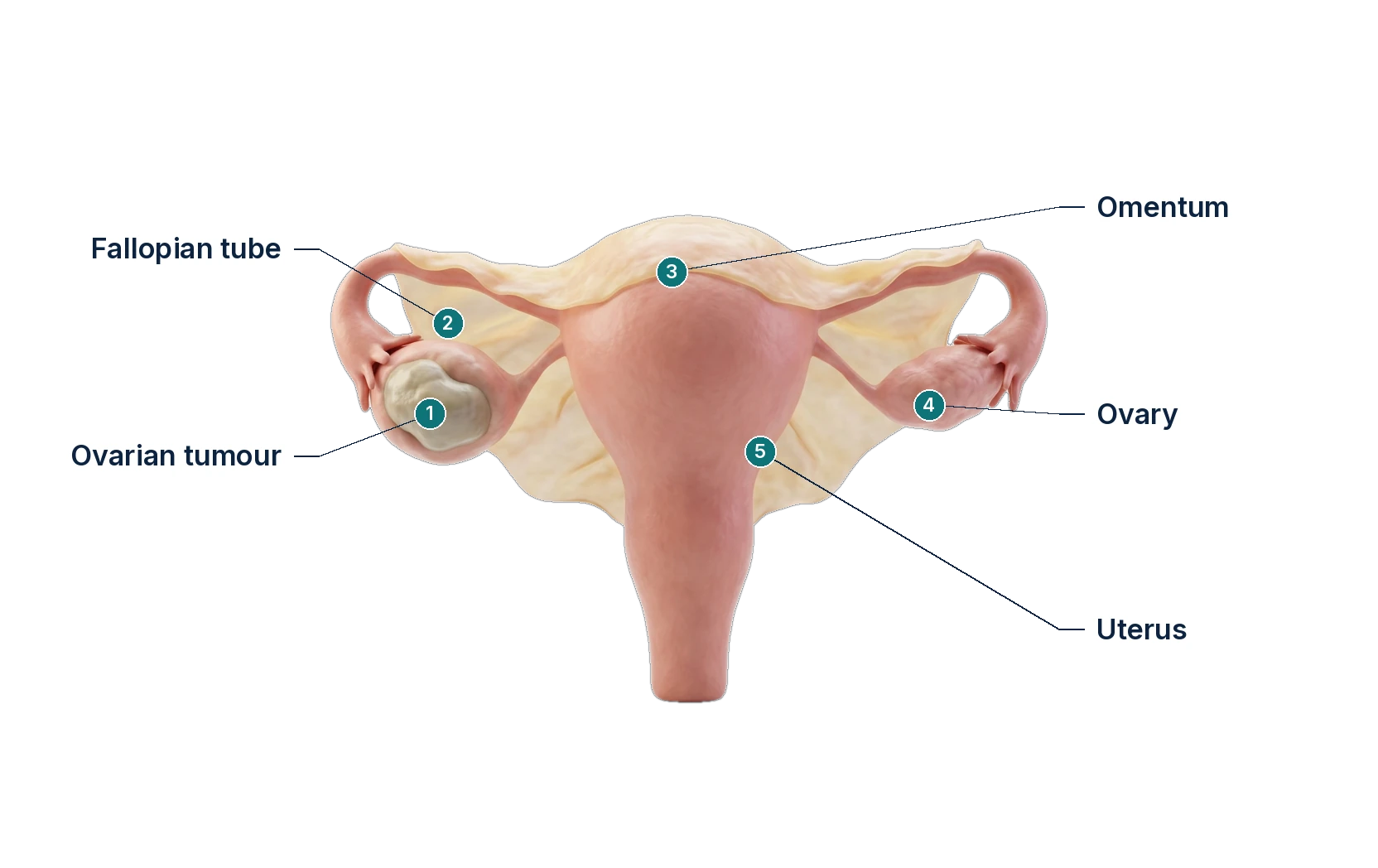
- Ovarian tumour
- Fallopian tube
- Omentum
- Ovary
- Uterus
The open end of each fallopian tube lies near an ovary. Cancers can start in either structure, and the treatment team considers their relationship when planning care.
Symptoms that should be checked
- Persistent bloating or a swollen abdomen
- Feeling full quickly or loss of appetite
- Pelvic or abdominal pain
- Needing to pass urine more often
- Changes in bowel habit or unexplained tiredness
Having one or more of these does not mean you have cancer. Most have other, more common causes, and only examination and tests can tell the difference.
Assessment and staging
- • Pelvic examination and ultrasound
- • CT scan of the chest, abdomen and pelvis where needed
- • Blood tests including CA-125
- • A biopsy in some cases, especially if chemotherapy is planned first
- • Genetic and tumour testing where appropriate to guide treatment and discuss inherited risk
- • Discussion with medical oncology and the wider team
Surgery and the order of treatment
Surgery first (primary)
- • Considered when the disease appears removable and you are fit for major surgery
- • Usually followed by chemotherapy
- • Often needs an open operation to see and remove all disease
Chemotherapy first (interval)
- • Considered for extensive disease or when you need time to recover strength
- • Chemotherapy is given, then surgery, then usually more chemotherapy
- • Laparoscopy is sometimes used to assess whether surgery is feasible
Neither order is better for everyone. The approach recommended for you is discussed after clinical assessment, with scans and biopsy results reviewed where needed or available. Not every procedure requires a biopsy or scans beforehand.
Possible risks
- • Bleeding, infection and blood clots
- • Bowel or bladder injury, and the possibility of a stoma if bowel is removed
- • Longer hospital stay after extensive surgery
- • Early menopause and loss of fertility
Other treatment options
- • Chemotherapy alone when surgery is not safe
Other aspects of care
- • Maintenance therapy after initial treatment for selected patients, guided by cancer type, response and genetic or tumour test results; it is not a replacement for indicated surgery
Recovery
Recovery after debulking surgery varies widely with the extent of the operation. Chemotherapy is usually part of the plan, and follow-up continues long term.
Frequently Asked Questions
Further reading
Independent patient and clinician information used as background for this page:
This page is general information, not medical advice. Your own treatment is discussed after assessment.