
Endometrial Cancer Surgery in Hyderabad
Endometrial cancer begins in the lining of the uterus. For most early cancers surgery is the main treatment, planned around staging and the tumour's features.
Quick answers
- Who performs it?
- A gynaecologic oncologist has a specialist role in planning gynaecologic cancer treatment with the surgical team. Dr Sanjay Yadagiri is a Consultant in Surgical Oncology in Hyderabad and performs these operations within his surgical oncology practice. At consultation, discuss who will lead surgery and which specialists are needed for your case.
- When is it considered?
- Surgery is commonly considered for confirmed endometrial cancer when the disease and your health make it appropriate. Unusual bleeding needs assessment rather than automatic surgery. Any postmenopausal bleeding should be assessed promptly.
- Where are consultations?
- Banjara Hills clinic, Mon-Sat: 1:00 PM - 5:00 PM. Sunday closed.
- How do I book?
- Use the booking form or call +91 70324 76866.
What is endometrial cancer surgery?
Endometrial cancer is the most common cancer of the uterus. It is often found early because it tends to cause abnormal bleeding, particularly after menopause. For early disease, the standard operation is a total hysterectomy with removal of both fallopian tubes and ovaries (bilateral salpingo-oophorectomy), often performed by a minimally invasive approach. Lymph nodes may be assessed, sometimes using sentinel lymph node biopsy. Surgery also provides the pathology information that decides whether radiotherapy, chemotherapy or other treatment is needed afterwards.
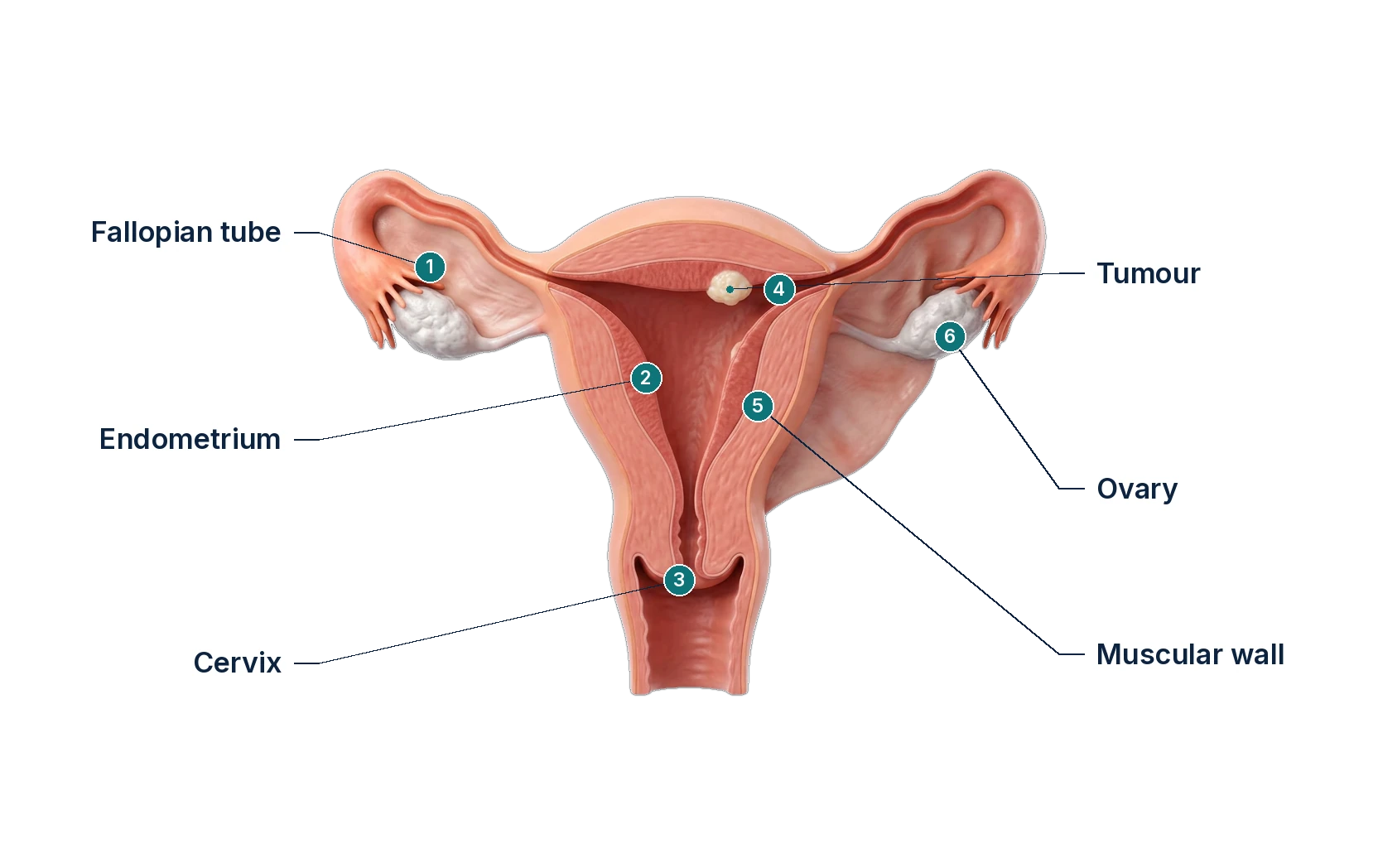
- Fallopian tube
- Endometrium
- Cervix
- Tumour
- Muscular wall
- Ovary
The endometrium is the inner lining of the uterus, distinct from the muscular wall. Surgery and any further treatment depend on staging and tumour features.
Symptoms that should be checked
- Any vaginal bleeding after menopause
- Bleeding between periods or unusually heavy periods at any age
- Unusual vaginal discharge
- Pelvic pain or pressure
Having one or more of these does not mean you have cancer. Most have other, more common causes, and only examination and tests can tell the difference. Any postmenopausal bleeding should be assessed promptly. Unusual bleeding before menopause also needs assessment, without an age-40 threshold.
Assessment and staging
- • Pelvic ultrasound to look at the womb lining
- • An endometrial biopsy to confirm the diagnosis and tumour type
- • MRI or CT scans where needed to assess spread
- • Fitness for surgery, as many patients have other conditions such as diabetes
Surgical options
What the operation involves
- • Total hysterectomy
- • Removal of both tubes and ovaries
- • Lymph node assessment, including sentinel lymph node biopsy in selected cases
- • Additional staging steps for some higher-risk tumour types
Choosing the approach
- • Minimally invasive surgery is commonly used for early-stage disease
- • Open surgery may be preferred for larger tumours or suspected spread
- • Body weight, previous surgery and general health are considered
- • The final choice is made with you after assessment
The approach recommended for you is discussed after clinical assessment, with scans and biopsy results reviewed where needed or available. Not every procedure requires a biopsy or scans beforehand.
Possible risks
- • Bleeding, infection and blood clots
- • Injury to bladder, bowel or ureters
- • Lymphoedema after lymph node removal
- • Menopause symptoms if you had not yet reached menopause
Other treatment options
- • Radiotherapy or hormone therapy when surgery is not safe
- • Fertility-sparing hormone treatment for very selected young patients, with close monitoring
Other aspects of care
- • Additional radiotherapy or chemotherapy after surgery, where indicated by stage and pathology
Recovery
Recovery depends on the approach and your general health. Further treatment is decided once the final pathology report is ready, and follow-up continues afterwards.
Frequently Asked Questions
Further reading
Independent patient and clinician information used as background for this page:
This page is general information, not medical advice. Your own treatment is discussed after assessment.