
Hysterectomy (Uterus Removal Surgery) in Hyderabad
A hysterectomy removes the uterus (womb). It is a major, permanent decision, so the reasons, the type of operation and the alternatives are talked through carefully at the Banjara Hills clinic before anything is planned.
Quick answers
- Who performs it?
- Dr Sanjay Yadagiri performs hysterectomy within his surgical oncology practice in Hyderabad. The reason for the operation determines the specialist input needed; for cancer, discuss the gynaecologic oncologist's planning role and who will lead your operation.
- When is it considered?
- Hysterectomy may be considered for selected cancers or high-risk pre-cancerous changes, or for significant benign disease when less invasive options are unsuitable or have not helped. Symptoms alone are not an indication to remove the uterus.
- Where are consultations?
- Banjara Hills clinic, Mon-Sat: 1:00 PM - 5:00 PM. Sunday closed.
- How do I book?
- Use the booking form or call +91 70324 76866.
What is a hysterectomy?
A hysterectomy is an operation to remove the uterus. Depending on the reason for surgery, the cervix, fallopian tubes and ovaries may also be removed. Afterwards you can no longer carry a pregnancy and your periods stop. Removing BOTH ovaries before natural menopause causes immediate surgical menopause. If one or both ovaries are retained, menopause may still happen earlier than it otherwise would. Ovary removal is a separate decision, weighed against your medical history and the reason for surgery. A radical hysterectomy also removes surrounding tissue and is used for selected cancers.
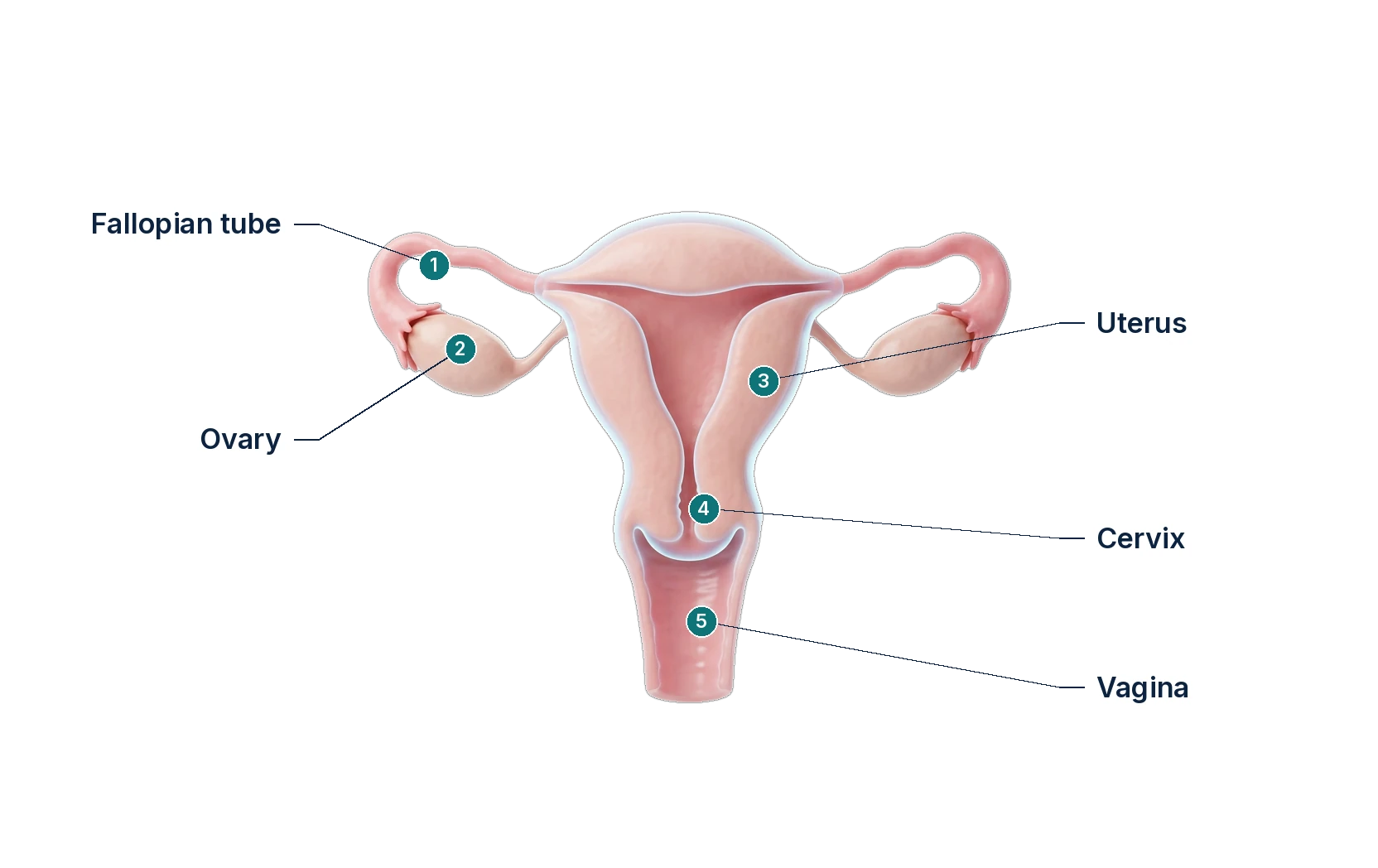
- Fallopian tube
- Ovary
- Uterus
- Cervix
- Vagina
A total hysterectomy removes the uterus and cervix. Whether to remove the ovaries is a separate decision.
Conditions assessed before considering hysterectomy
- Cancer or high-risk pre-cancerous change of the uterus, cervix or ovaries
- Heavy or painful periods that have not settled with other treatment
- Large or symptomatic fibroids
- Prolapse of the womb
- Pelvic conditions, such as endometriosis, where other treatments have not helped
For non-cancer conditions, a hysterectomy is usually considered only after less invasive options have been discussed or tried.
Assessment and staging
- • A full history and pelvic examination
- • Ultrasound and, where needed, MRI or CT scans
- • Biopsy where needed if cancer is suspected; cervical screening identifies risk or abnormal cells but does not diagnose cancer
- • A discussion of whether to keep or remove the ovaries and cervix
Types of hysterectomy
By extent of surgery
- • Total hysterectomy: uterus and cervix removed
- • Subtotal hysterectomy: uterus removed, cervix left in place
- • With salpingo-oophorectomy: tubes and one or both ovaries also removed
- • Radical hysterectomy: uterus, cervix and surrounding tissue, used for some cancers
By route of surgery
- • Abdominal (open) through a cut in the lower tummy
- • Laparoscopic (keyhole) through small cuts
- • Vaginal, with no cut on the abdomen
- • The route depends on the reason for surgery, the size of the uterus and previous operations
The approach recommended for you is discussed after clinical assessment, with scans and biopsy results reviewed where needed or available. Not every procedure requires a biopsy or scans beforehand.
Possible risks
- • Bleeding, infection and blood clots, as with any major operation
- • Injury to nearby organs such as the bladder, bowel or ureters
- • Immediate surgical menopause if BOTH ovaries are removed before natural menopause
- • Menopause may happen earlier even if one or both ovaries are retained
- • Effects of the anaesthetic
Other treatment options
- • Medicines or hormone treatment for heavy periods
- • Procedures that treat fibroids or the womb lining without removing the uterus
- • Pessaries or pelvic floor treatment for prolapse
Recovery
Recovery varies with the type of hysterectomy and your general health. Keyhole and vaginal operations often allow a quicker return to normal activity than open surgery, but everyone is different. You will be given personal guidance on driving, lifting, work and sex before discharge.
Frequently Asked Questions
Further reading
Independent patient and clinician information used as background for this page:
This page is general information, not medical advice. Your own treatment is discussed after assessment.