
Parotid Gland Surgery in Hyderabad
Most parotid lumps are benign. After assessment, selected benign lumps may be monitored; others need excision because of their diagnosis, growth, symptoms or concern about cancer. Surgery aims to preserve facial nerve function where possible.
Quick answers
- Who performs it?
- Dr Sanjay Yadagiri performs parotid surgery within his surgical oncology practice in Hyderabad. The diagnosis and extent of disease determine the surgical plan and any other specialist input needed; discuss the lead surgeon and facial nerve risks at consultation.
- When is it considered?
- Excision may be considered for suspected or confirmed malignancy, growing or symptomatic tumours, or selected benign tumours where the benefits outweigh the risks. A lump alone calls for assessment, not automatic surgery. Monitoring is an option for selected benign lumps after specialist assessment.
- Where are consultations?
- Banjara Hills clinic, Mon-Sat: 1:00 PM - 5:00 PM. Sunday closed.
- How do I book?
- Use the booking form or call +91 70324 76866.
What is parotid gland surgery?
The parotid glands sit in front of each ear and make saliva. The facial nerve runs through the gland and moves the face. A parotidectomy removes a lump with part or all of the gland. Pleomorphic adenoma is a common benign tumour that may grow slowly and has a small risk of malignant change over time; this does not mean every benign growth becomes cancer. Selected benign lumps can be monitored after assessment. Cancer may require wider surgery, neck lymph node removal and radiotherapy afterwards. Facial nerve preservation is an aim, but tumour involvement can limit what is possible.
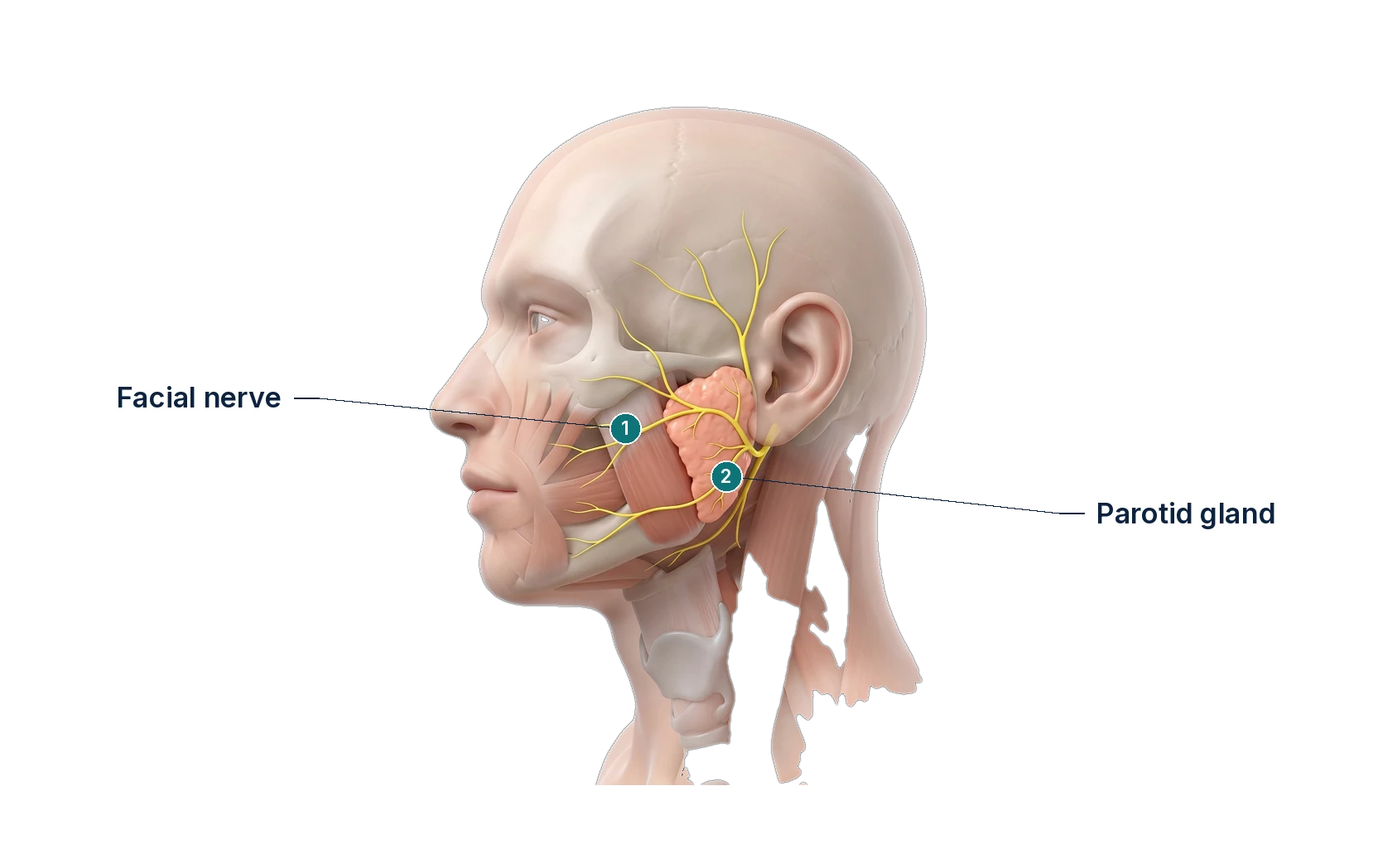
- Facial nerve
- Parotid gland
Branches of the facial nerve pass through the parotid gland. The position of a lump in relation to the nerve affects the risk of facial weakness after surgery.
Parotid symptoms that need assessment
- A painless lump in front of or below the ear
- A lump that is growing
- Weakness of the face on one side, or pain in the lump
- Recurrent infection or blockage of the gland
Most parotid lumps are benign. Facial weakness, pain or rapid growth needs prompt assessment.
Assessment and staging
- • Examination of the lump, face and neck
- • Ultrasound, often with a fine-needle or core biopsy
- • MRI or CT scan in some cases
Types of parotid surgery
Superficial parotidectomy
- • Removes the outer part of the gland
- • Used for many benign lumps in the outer lobe
- • The facial nerve is identified, with preservation as an aim where possible
Total or extended parotidectomy
- • Removes the whole gland, or more if needed
- • Used for deeper lumps and some cancers
- • May include neck lymph node removal for cancer
The approach recommended for you is discussed after clinical assessment, with scans and biopsy results reviewed where needed or available. Not every procedure requires a biopsy or scans beforehand.
Possible risks
- • Temporary weakness of facial muscles, which usually recovers
- • Permanent facial weakness; risk varies with tumour involvement of the nerve and the extent of surgery
- • Numbness of the ear lobe
- • Gustatory sweating (Frey's syndrome) when eating
- • Saliva collection under the wound or a hollow in the cheek
Other treatment options
- • Monitoring with examinations and scans for selected benign lumps after specialist assessment and discussion of risks
Other aspects of care
- • Radiotherapy after surgery for selected cancers, based on pathology and risk; this is additional treatment, not an alternative to the operation
Recovery
Many patients have a drain for a short time. Recovery of any temporary facial weakness can take weeks to months and varies between people.
Frequently Asked Questions
Further reading
Independent patient and clinician information used as background for this page:
- ENT UK: Parotidectomy, surgery to remove a lump
- Gloucestershire Hospitals NHS: Discharge information following a parotidectomy
This page is general information, not medical advice. Your own treatment is discussed after assessment.